
The Data Deluge: Biggest Challenges in Modern Data Analysis (and How to Overcome Them)
We are living in the golden age of data. With the rise of IoT devices, social media, and cloud computing, organizations have access to more information than ever before. But as the old saying goes, “With great data comes great responsibility” and, invariably, great complexity.
Modern data analysis is no longer just about running a few SQL queries or building a simple Excel pivot table. Today’s analysts are tasked with navigating a minefield of messy formats, ethical quandaries, and technological bottlenecks.
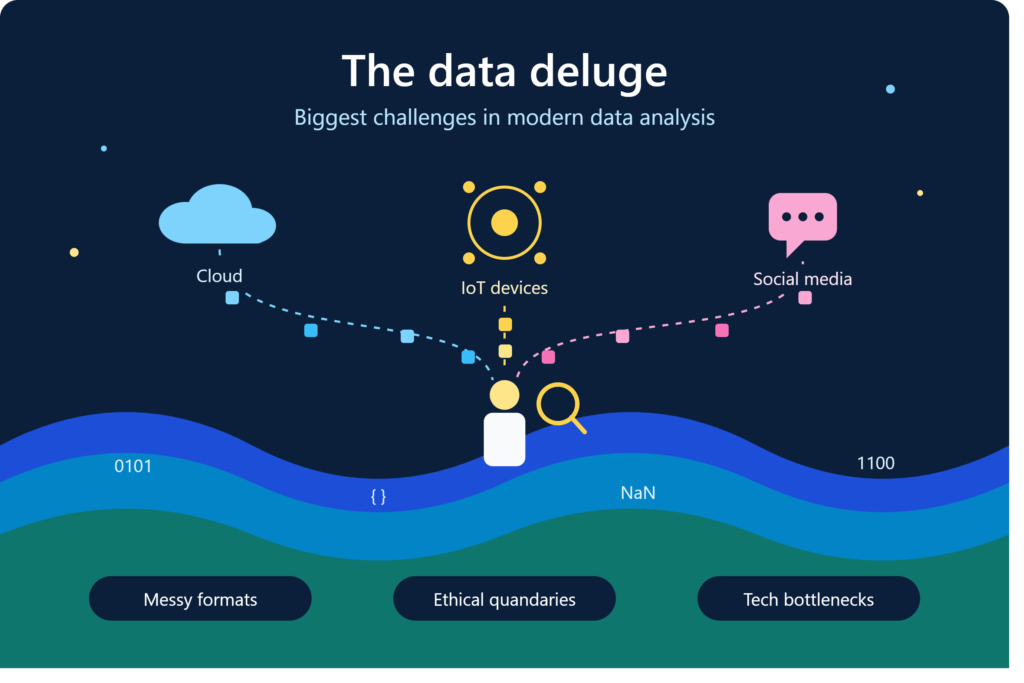
To help you navigate this landscape, we’ve identified the five biggest challenges facing modern data analysis today—and, more importantly, how to overcome them.
1. The “Garbage In, Garbage Out” Dilemma (Data Quality)
The Challenge:
It is estimated that data professionals spend up to 80% of their time just cleaning and preparing data. The modern data ecosystem is fragmented. Data comes from CRMs, spreadsheets, web logs, and third-party APIs. When this data is siloed or inconsistent, analysts end up analyzing “dirty” data, leading to flawed insights and, ultimately, poor business decisions.
The Solution:
You cannot fix what you cannot see. To combat poor data quality, organizations must implement automated data validation pipelines. Instead of manual spot-checking, use tools that automatically flag anomalies, duplicates, and formatting errors as data enters the system.
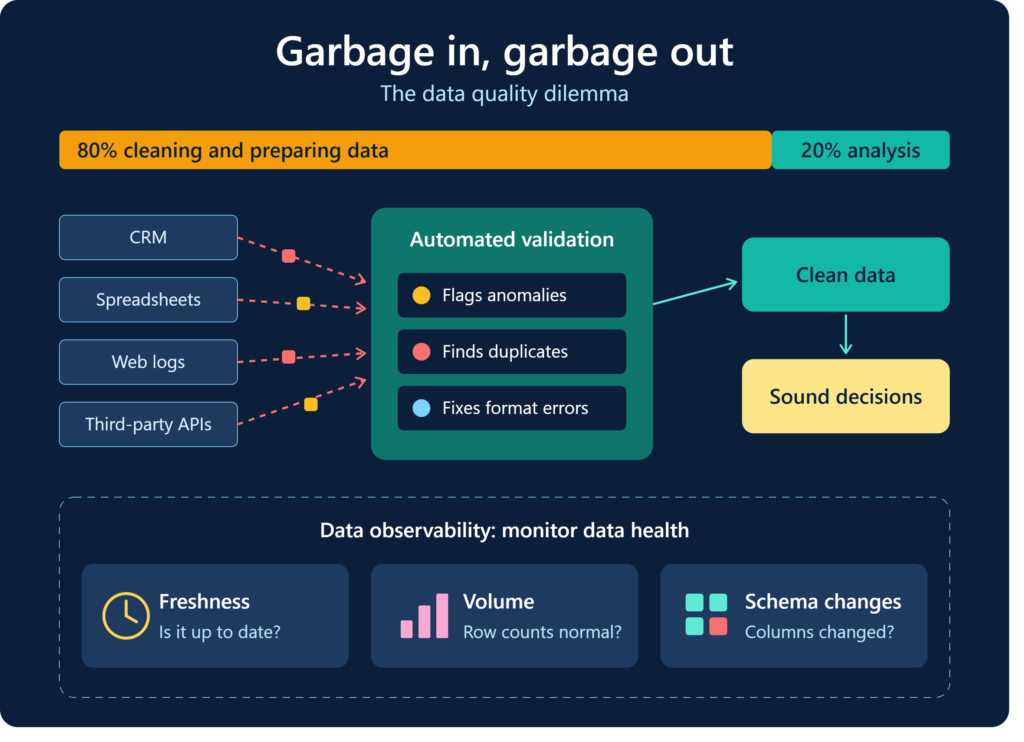
Furthermore, adopt a “Data Observability” mindset. Just as DevOps monitors system uptime, data teams must monitor data health—tracking metrics like freshness, volume, and schema changes to ensure the integrity of the pipeline.
2. The Integration Trap (Data Silos)
The Challenge:
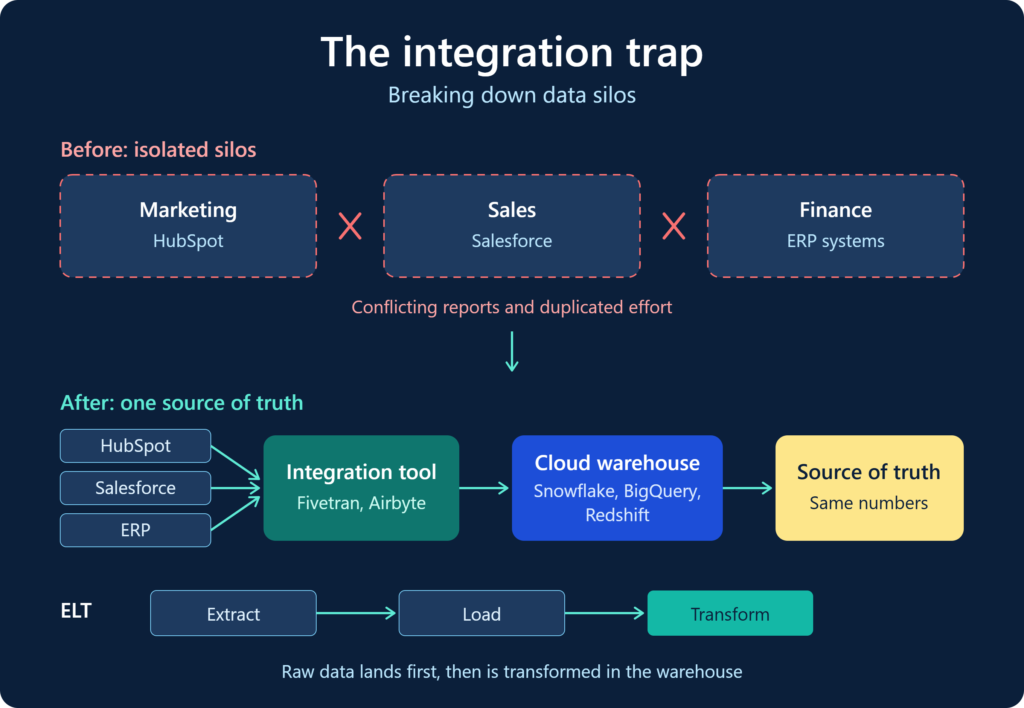
Data rarely lives in one place. Marketing uses HubSpot, Sales uses Salesforce, and Finance uses ERP systems. When these systems don’t talk to each other, you create “Data Silos.” This fragmentation makes it nearly impossible to get a holistic view of the customer or the business, resulting in duplicated efforts and conflicting reports.
The Solution:
The answer lies in modern data architecture. Moving away from traditional ETL (Extract, Transform, Load) to ELT (Extract, Load, Transform) using cloud data warehouses (like Snowflake, BigQuery, or Redshift) creates a central source of truth.
Implement a Modern Data Stack with an integration tool (like Fivetran or Airbyte) that continuously syncs data from all your sources into one warehouse. This ensures that everyone in the organization is looking at the same numbers.
3. The “Insight Gap” (Turning Analysis into Action)
The Challenge:
You have built the dashboard. You have crunched the numbers. You have found a key trend. But… nobody uses it. This is the “Insight Gap.” Many data teams get bogged down in reporting the past rather than predicting the future. Stakeholders often lack the data literacy to interpret complex dashboards, rendering the analysis useless.
The Solution:
Shift your focus from descriptive analytics (what happened) to prescriptive analytics (what should we do about it?). This requires Data Storytelling.
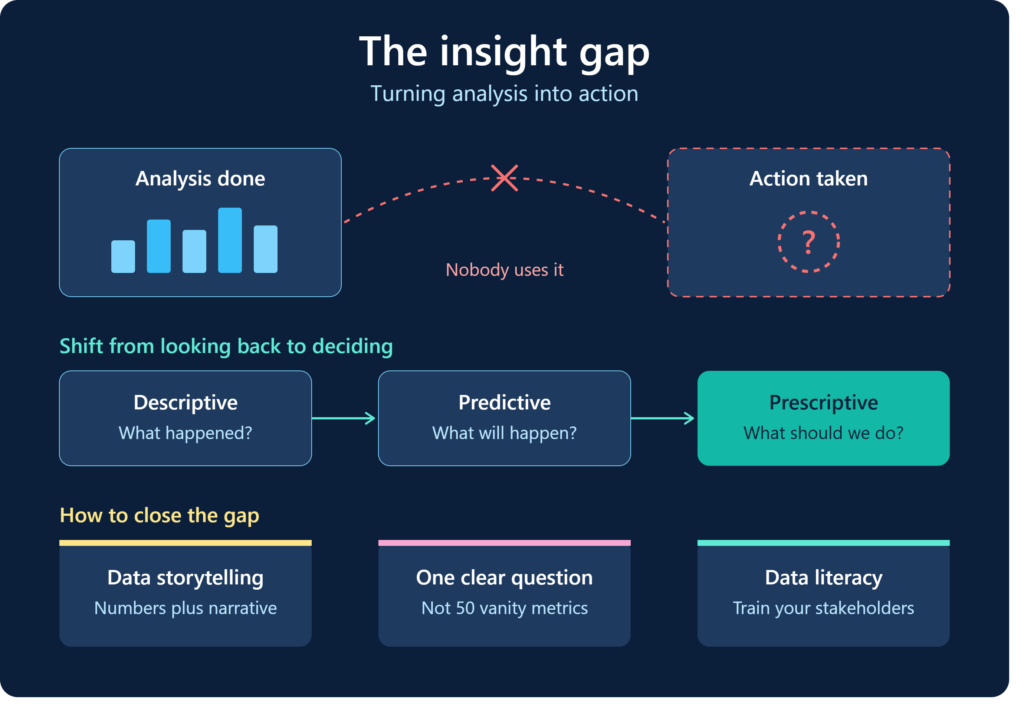
Stop building vanity dashboards with 50 metrics. Build dashboards that answer one specific business question. Pair quantitative data with qualitative narratives. Furthermore, invest in data literacy training for your stakeholders. If they understand the “why” behind the data, they are far more likely to act on the “what.”
4. The Talent Crunch and Skill Shift
The Challenge:
The role of the data analyst is changing rapidly. The market is saturated with bootcamp graduates who know basic Python, but the demand is skyrocketing for professionals who understand both the engineering side (cloud infrastructure, pipelines) and the business side (strategy, communication). Finding a “unicorn” who can code, analyze, and communicate is difficult and expensive.
The Solution:
Embrace Hybrid Roles and upskilling. Organizations need to foster a culture of continuous learning. Encourage analysts to learn basic data engineering concepts (SQL, Python) and encourage engineers to learn business acumen.
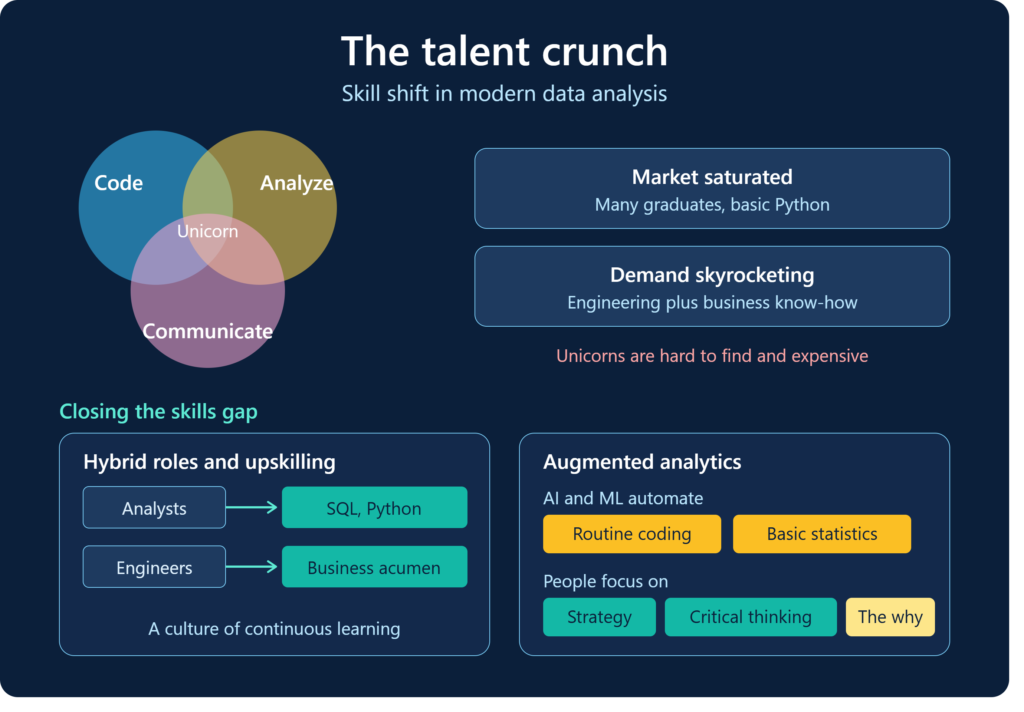
Additionally, leverage Augmented Analytics. AI and Machine Learning are automating the mundane tasks of coding and basic statistical analysis. This allows your human talent to focus on the high-value tasks: strategy, critical thinking, and interpreting the “why.”
5. Security, Privacy, and Governance
The Challenge:
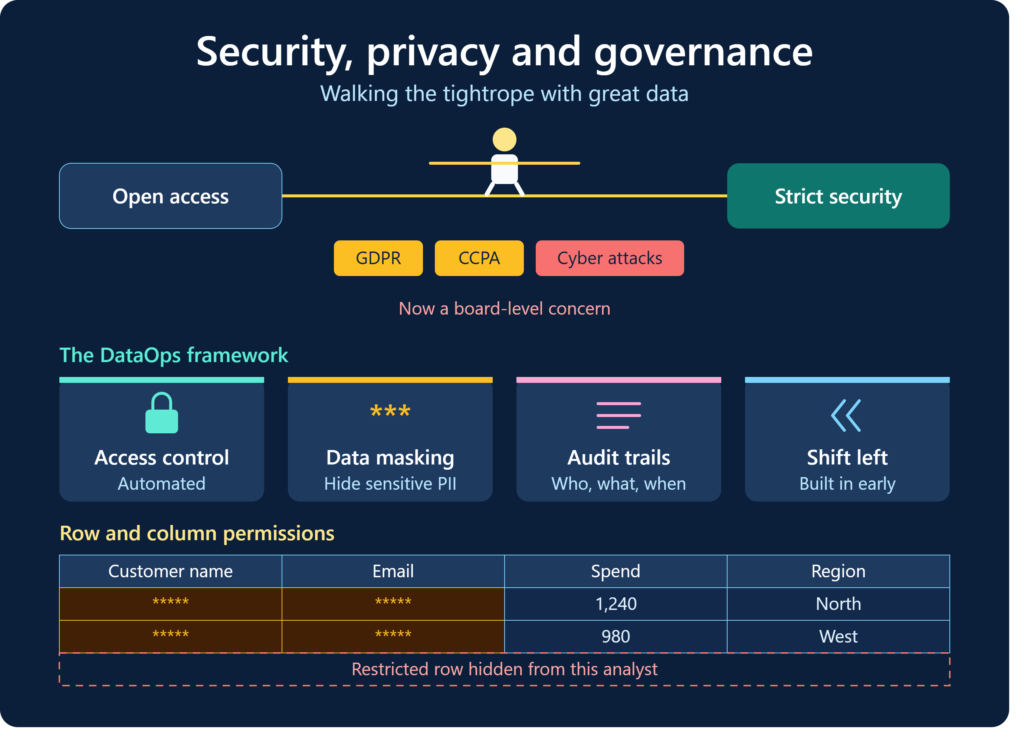
With great data comes great liability. The rise of GDPR, CCPA, and other privacy regulations has made data governance a board-level concern. Simultaneously, the threat of cyber attacks and data breaches is higher than ever. Balancing the need for open data access with strict security protocols is a tightrope walk for modern analysts.
The Solution:
Implement a DataOps framework. This includes automating access controls, masking sensitive data (PII), and maintaining detailed audit trails of who accessed what data and when.
Security should be “shifted left”—meaning it is built into the data pipeline from the very beginning, not bolted on as an afterthought. Utilize robust data governance platforms that allow you to set permissions at the row or column level, ensuring that analysts can do their jobs without ever seeing sensitive customer information.
The Bottom Line
Modern data analysis is hard. The volume, velocity, and variety of data are only going to increase. However, by focusing on automated quality assurance, centralizing your architecture, telling better stories, and prioritizing governance, you can turn these challenges into your competitive advantage.
The goal isn’t just to analyze data—it’s to build a data culture that drives smarter decisions at every level of the organization.